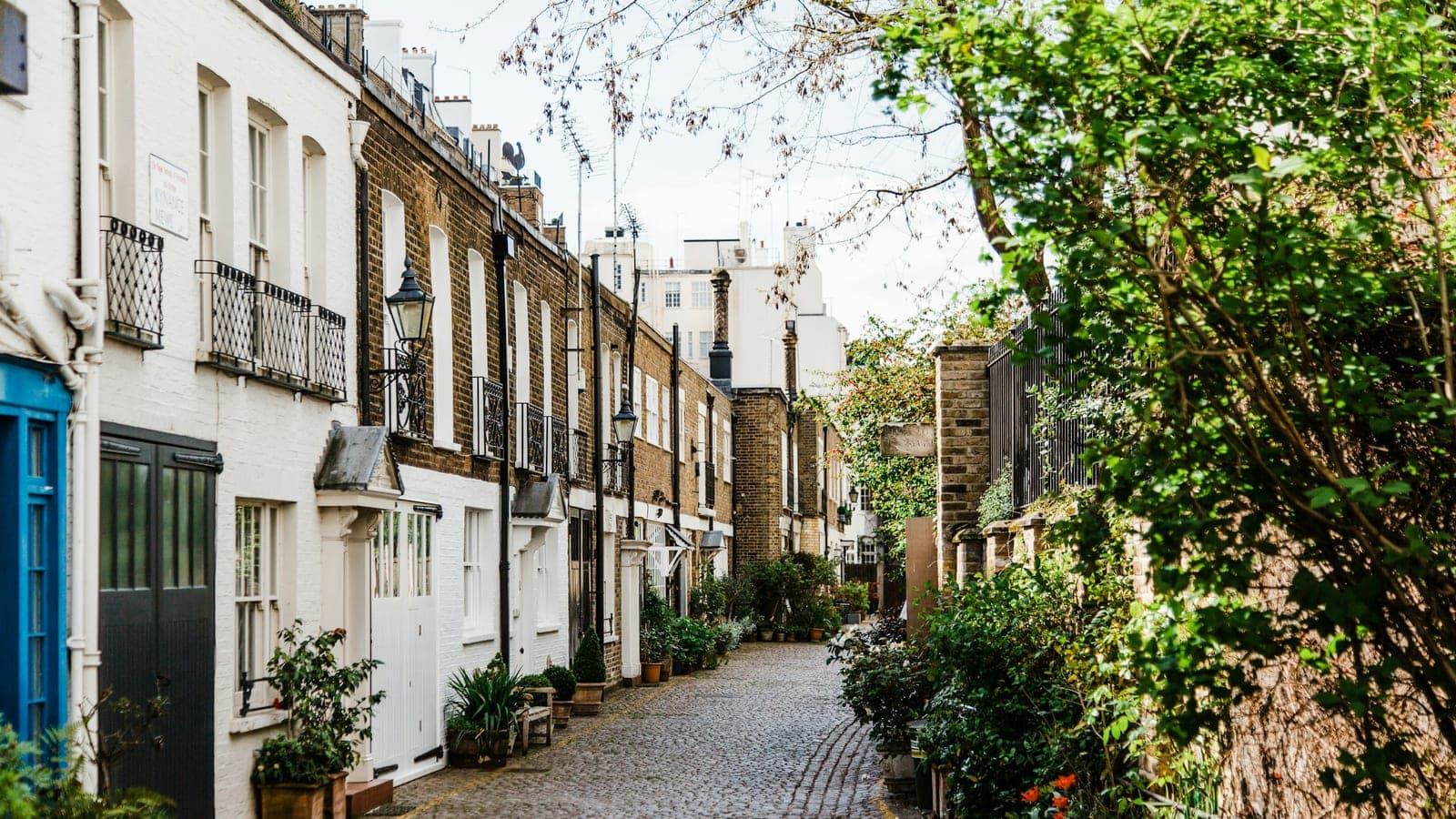
For five years we rented out our one-bedroom flat in South East London the normal way: long-term tenants, an agency in the middle, because we don't live in London and someone had to be there. And whenever we came up to the city, we paid for the hotel next door to a flat we own. This is the story of how we got it back, why we now rent it only to people we trust, and why PrivateStay exists.
Prefer to watch? We told the story on camera, both of us, in ten minutes. The chapters under the player jump to each part.
Chapters
Five years of renting and almost nothing to show for it
The first two years, the flat broke even. Then interest rates went up, the mortgage went up with them, the agency fees followed, and from that point on the flat lost money every year. Every time a tenant moved out we paid again to find the next one. Every time the place needed attention, a charge landed on us. Owning it had become a cost, whether or not anyone lived in it.
Alessia put it in one question: "Is it really worth it to own a property and rent it out when, at the end of the day, we're spending more money than we would by keeping it empty?"
That is a strange place for a landlord to arrive at. We were doing everything the way you are supposed to, and it was not working.
The hotel next door to our own flat
We visit London often. With a tenant in the flat, we stayed at the hotel next door. We were paying a mortgage on a home a few meters away and paying again to sleep beside it.
"It's the most stupid thing we've ever done," Alessia said. And then, one day: "Enough. Can we just get our flat back and rent it to friends and family?"
I was the cautious one. Long-term renting felt like the safe option. But we were losing money anyway, so there was nothing left to be cautious about. We decided to try.
Why not Airbnb
The obvious answer would have been to put the flat on Airbnb and let the market fill it. We never considered it, and the reason is simple: it's our home. Our things are in it. We go and live there.
"It's my flat with my stuff in it, with my belongings, and I do care about my place," is how Alessia says it. With a public listing you never know who is coming in. Plenty of hosts are fine with that; for this flat, we were not. Trust was the one thing we would not give up.
Why texting friends doesn't work either
So, friends and family. The problem is that "hey, we have a flat in London, let us know if you ever want it" does not work. People forget you have a place. They half remember, but not how many it sleeps, what it looks like, or whether you really meant the offer.
Then there is the awkwardness. If a friend wants to stay, are they asking you for a favor? Are you supposed to offer them a special rate? How do you bring up the price at all without making the conversation uncomfortable? Every stay starts with a money talk between people who like each other, and nobody enjoys it.
And on our side, the owner becomes the bottleneck: answering the same questions about dates, prices and the apartment every time, messaging the whole phone book whenever the place is free, handing over keys by hand. We wanted none of that.
A private page for the people we know
I build things for a living, so I built a page. The idea was a closed circle: people we know ask to join, we approve them, and from then on they see everything a listing would show. Photos. A calendar connected to our own calendar, so it always shows real availability, including the dates we block for ourselves. Prices, with an instant total for any dates. The FAQ, the area, the house rules. They can request a stay and message us, all without us lifting a finger.
The part that mattered was what it was not: it was not public. Think MySpace, not a marketplace. Your own group, where everyone is at most one friend away from you. If anything ever happens, we know exactly who they are and who to call. And in our experience, people who know you, even through a friend, look after your place instead of treating it like a hotel room.
If you want the longer explanation of how such a page works today, the help center has it: what PrivateStay is.
What happened in the first week
We put the first version together quickly and told a few friends. People started registering, and each one wrote how they knew us. A friend told a friend. Within the first week we had our first booking: four nights, from a friend of a friend we had never met.
That was the moment the lightbulb went on. The system had done everything: the request, the dates, the price, the messages. We had only approved a person.
And it showed us something we had not planned for. Nobody had to remember our phone number, describe the flat and arrange an introduction. They forwarded a link. The person at the other end could see the place, check the dates, understand the cost and decide. We still approved every booking ourselves, so the circle stayed ours, but it grew on its own.
Soon after, another friend of a friend stayed for two weeks straight. One guest told us they usually stayed somewhere else in London, but "yours looks better." They were not comparing our flat to a hotel. They were comparing our page to the other options, and a proper page made a friends-only rental look like a real place to book rather than a favor to ask for.
Those first guests were the most delightful people we had hosted in five years of renting. Their words on our page say it better than we could: "we will stay there again," and, from another, that they "had a great time in London thanks to" us. Nobody had to be chased, nobody had to be checked on, and nothing was left for us to fix afterwards.
A mutual connection is not a guarantee that nothing will ever go wrong. But knowing how every guest is connected to you, and deciding yourself who gets the keys, makes it a different kind of arrangement from handing your home to whoever books first.
Who else this is for
After those bookings I started wondering how many other owners were in a version of our situation.
The second home that sits empty for part of the year, which you would happily lend or rent to people you know if it were not such a hassle to organize. The owner who, like us, does not live where the property is and wants to keep using it rather than sign it away to another long-term tenant. And the vacation rental owner who already has repeat guests and referrals, people who ask every year, and no good way to take those bookings directly without a public listing in the middle.
In every one of these cases the owner already knows people who would love to stay. What is missing is a simple way to let them see the place, check the dates and ask.
The rule we built PrivateStay on
So I rebuilt the whole thing so that anyone could create their own page for their own property. It comes with one rule, and the rule will not change: no platform should eat into a property owner's profit. Every cent you make with your own property stays in your pocket. Payment is arranged directly between you and your guest; PrivateStay never holds the money and never takes a percentage.
PrivateStay is not a competitor to Airbnb or Booking.com. It does something different. It gives owners, of one property or many, their own trusted circle: friends, family, and the guests who have already proven themselves. You decide who can see your place and who can book it. The page is free for one property, and it is a complete system: calendar sync, pricing, booking requests, messaging.
We sleep in our own bed again
These days, when we go to London, we block our dates in the calendar. The page updates on its own, and we sleep at home. Alessia's verdict, when I asked whether she was happy to be back in her own bed: "I very much am. No more hotels."
That is really all we wanted at the start. The flat is ours again, it pays for itself through people we trust, and nobody is taking a cut.
Give the guests you trust a private way to book
Build a private page for your property in minutes. Only the people you invite can see it and book, and every cent stays with you.
Free for one property. No card required.